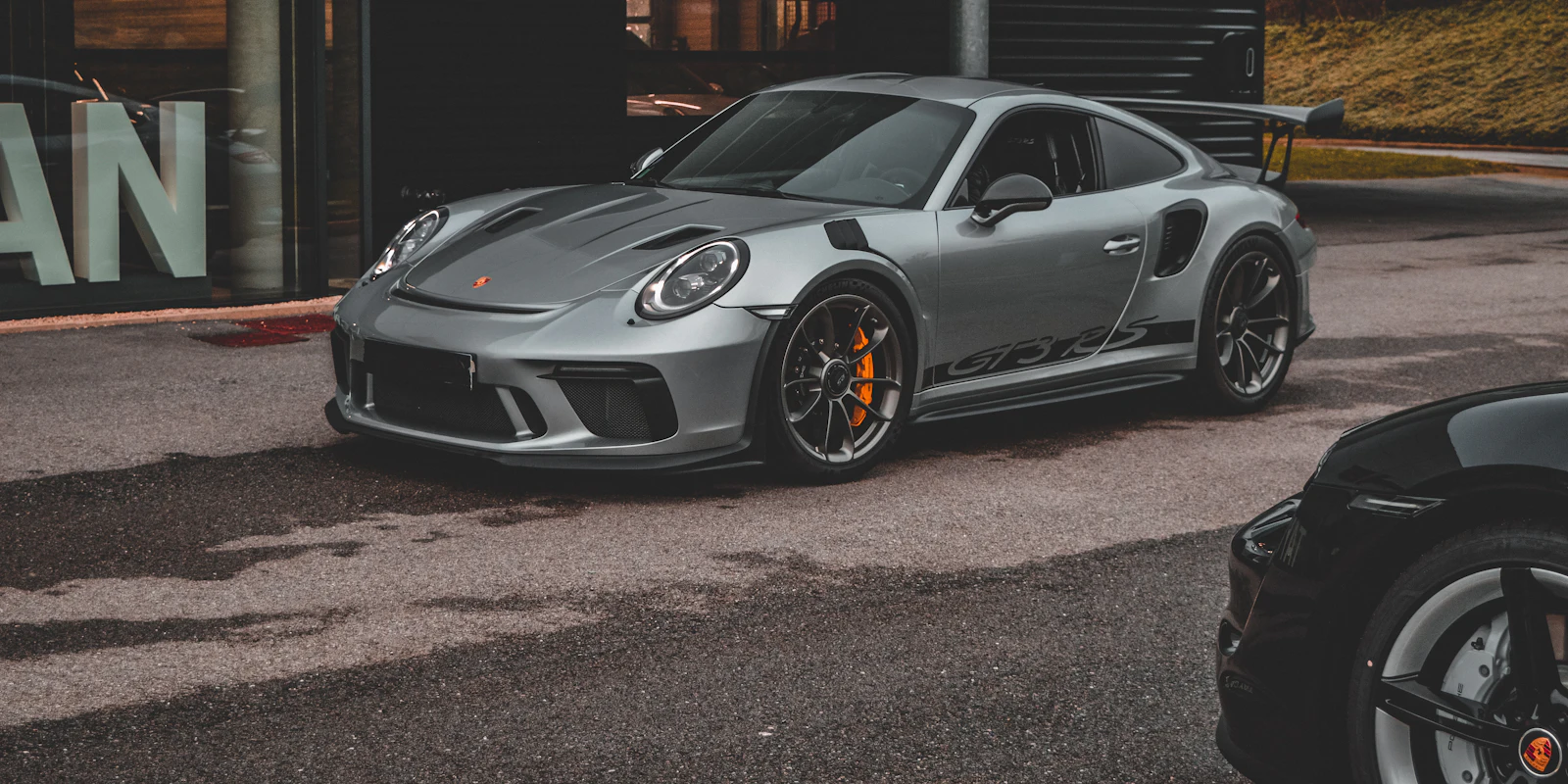
Porsche has the deepest used market of any brand in this guide, and that cuts both ways. There are more buyers, but there are also more cars like yours for them to compare against. What separates a strong offer from an average one is usually configuration and paperwork: the original options, the transmission, and records that answer the questions Porsche buyers always ask.
Porsche also runs its own selling program through its dealer network, so you have one more option here than with most exotic brands. This guide compares them all.
At a glance
- Quickest sale
- A Porsche dealer, Porsche's own selling program, or a specialist buyer with nationwide pickup.
- Highest ceiling
- Auction or a private sale for GT cars, manuals and Paint to Sample colors.
- Biggest lever
- Configuration. Transmission, Paint to Sample and options can matter more than mileage.
- Watch for
- Offers on GT cars that arrive before the buyer has asked for the DME over-rev report.
Your options for selling a Porsche
| Route | Speed | Price potential | Your effort | For a Porsche |
|---|---|---|---|---|
| Specialist exotic buyer | ●●●●● | ●●●●● | ●●●●● | A strong choice for GT cars, older 911s and anything with unusual spec, where specialist buyers know what the configuration is worth. |
| Brand dealer | ●●●●● | ●●●●● | ●●●●● | Porsche runs its own online selling program that connects owners with Porsche dealers, and dealers buy for the Porsche Approved certified pre-owned program. It's convenient, and competitive for recent cars. |
| Consignment | ●●●●● | ●●●●● | ●●●●● | Useful for air-cooled 911s and rare GT cars, where a specialist can find the right buyer. |
| Online auction | ●●●●● | ●●●●● | ●●●●● | Online enthusiast auctions are very active for Porsches, especially manuals, GT cars, air-cooled 911s and Paint to Sample colors. |
| Private sale | ●●●●● | ●●●●● | ●●●●● | The Porsche enthusiast community is large and informed, so private sales work well. Expect detailed questions, and verify funds before releasing the car. |
More dots = faster, higher potential, or more work for you. These are general patterns, not guarantees.
How buyers look at each Porsche model
911 (992 and 991)
2012–presentThe core of the used market. Buyers sort first by body, drivetrain and transmission, then options. A manual Carrera T or GTS, Paint to Sample colors, and options like the front-axle lift and sport exhaust can move the price well above the average. Read the 911 seller’s guide →
911 GT3, GT3 RS, GT2 RS
1999–presentBought like collectibles. Buyers ask for the DME over-rev report, which records whether the engine has been over-revved, along with service history and track-use disclosure. Have the report pulled before you list. Read the 911 seller’s guide →
911 (997 and 996)
1998–2012Older water-cooled cars where engine history comes first. On 996 and early 997 cars with the M96 or M97 engine, buyers ask about the intermediate shaft (IMS) bearing and cylinder bore scoring. Proof of an IMS upgrade or a recent borescope inspection helps a lot. Read the 911 seller’s guide →
718 Cayman and Boxster
2016–presentMid-engine cars where the GT4, GTS 4.0 and Spyder lead demand, especially with manual gearboxes. Four-cylinder cars sell on price and condition. Read the Boxster or Cayman seller’s guide →
Cayenne, Macan, Panamera, Taycan
2003–presentHigher-volume cars where pricing is very competitive and close to guidebook values. Mileage, warranty remaining and options matter most. Taycan buyers will also ask about battery health and charging equipment. Read the Cayenne, Macan or Panamera seller’s guide →
What moves the price
- ConfigurationTransmission, Paint to Sample or special colors, and factory options. Pull the original window sticker or a VIN-based options list so a buyer can confirm everything.
- Engine documentationThe DME over-rev report on GT cars, IMS bearing and bore-scoring evidence on 996 and 997 cars, and dealer service history on everything.
- WarrantyRemaining factory warranty or Porsche Approved certified coverage adds value. Make sure the buyer knows exactly when it ends.
- Condition and protectionFront-end paint, wheels and interior wear. Well-kept paint protection film and ceramic coating are pluses.
- OriginalityPorsche enthusiasts reward originality. Include original parts if the car has been modified.
How to sell a Porsche, step by step
- Gather the details: VIN, mileage, options, photos of every angle and the interior, and your service records.
- Get written offers from two or three buyers who handle Porsches. Send each one the same details so the offers are comparable.
- Inspection. The buyer confirms the car matches your description, either through a local inspector or a detailed video call.
- Agree the final number and paperwork. Get the price, any deductions, the transport arrangements and the payment timing in writing.
- Payment, then pickup. Funds (or your loan payoff) are confirmed, then an enclosed transporter collects the car and you sign over the title.
For GT cars and older 911s, expect a buyer to request a pre-purchase inspection, including the over-rev report or a borescope inspection. Getting these done before you list removes the biggest reasons for a buyer to lower the offer.
Selling for the first time? How selling works explains each route and the common scams to avoid.
Selling a Porsche with a loan or lease
Most Porsche owners who sell still have a loan or lease on the car. That doesn't stop a sale; it adds one step.
- Get a payoff quote from your lender or leasing company. Ask for a 10-day payoff figure and the exact payment instructions.
- Give it to the buyer. A professional buyer pays your lender directly and sends you whatever is left. That's your equity.
- If you owe more than the offer, you pay the difference (negative equity) before the title can transfer.
- For a lease, check first whether your leasing company allows a third-party buyout. Some only let the original dealer buy the car.
Keep copies of the payoff confirmation and the lien release. The full loan and lease walkthrough covers the paperwork in more detail.
What to have ready
- Title, or your lender's details if there is a loan
- Valid registration and a government-issued photo ID
- All keys and fobs
- Service records, organized by date
- Owner's manuals and books
- Window sticker or VIN-based options list
- DME over-rev report (GT cars and manual 911s)
- IMS bearing or borescope documentation (996 and 997 with M96/M97 engines)
Common questions
Should I use Porsche's own selling program?
It's worth getting a number from it. It's convenient and connects you with Porsche dealers. Compare that offer with at least one specialist or auction estimate, especially for GT cars, manuals and unusual colors, which dealers may not fully price.
What is a DME over-rev report?
The engine computer (DME) records time spent in different rev ranges, including over-revs. A Porsche dealer or specialist can print it. GT and manual-911 buyers routinely ask for it before making a final offer.
How much is my Porsche worth?
For high-volume models like the Cayenne and Macan, guidebook values are a fair starting point. For GT cars, manuals and special colors, recent auction results and specialist offers are far more accurate.
Can I sell my Porsche if it's leased?
Usually. You get a payoff quote from the leasing company and the buyer pays it. Some lessors restrict third-party buyouts, so call yours first. The loan and lease section above covers this.
Does a manual transmission really add value?
On sports cars, often yes, and sometimes by a lot. A manual 911, GT car or 718 GT4 can be worth significantly more than the same car with PDK, because manual supply is limited.