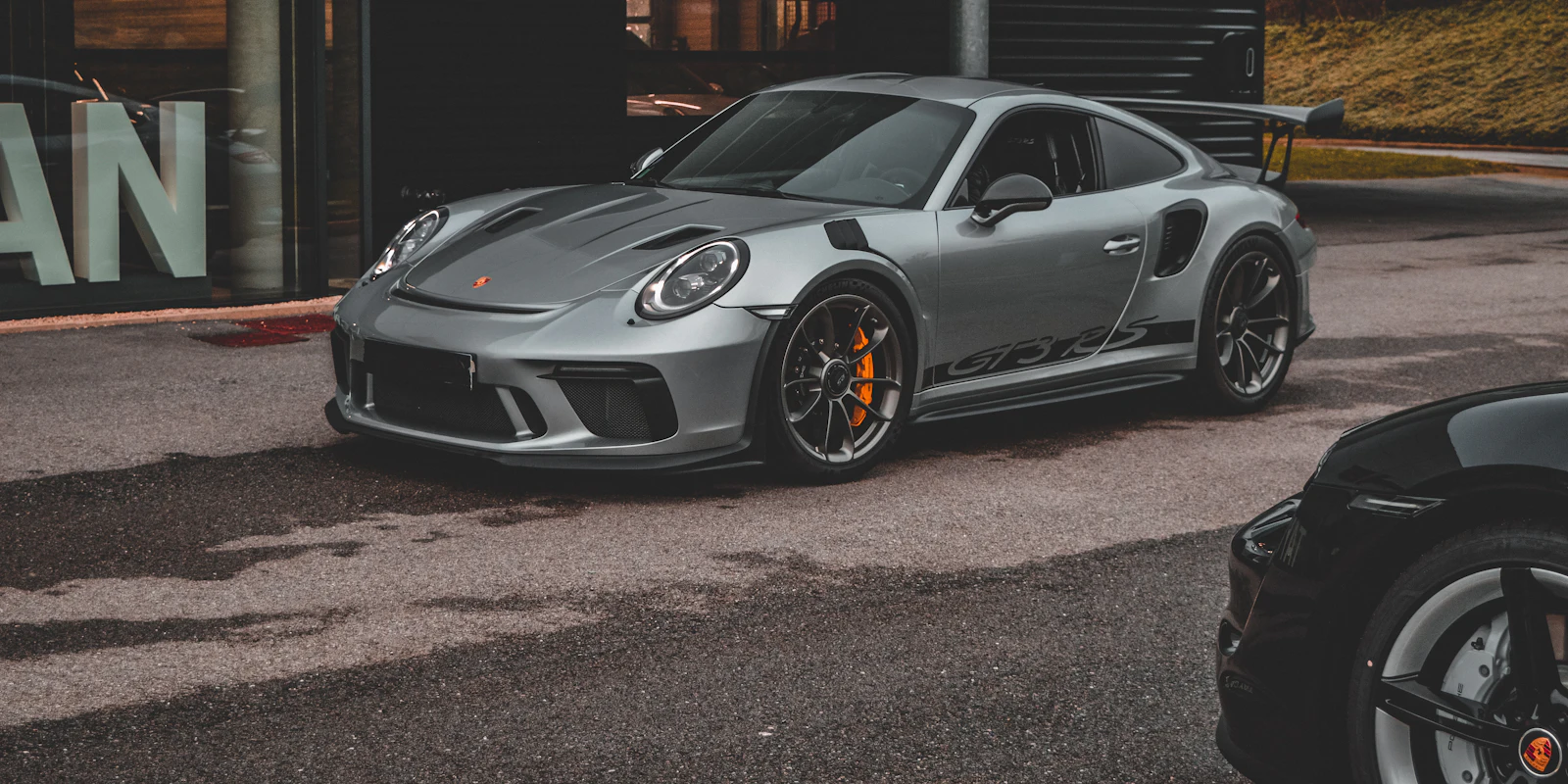
The engine computer in a modern Porsche, known as the DME, records every time the engine is spun faster than it should be. A dealer or specialist can read that record and print it as an over-rev report. For manual cars and GT models, it's one of the first documents a serious buyer will ask for.
Key numbers
- What it is
- A printout from the engine computer showing how often and how far the engine has been over-revved.
- Ranges
- Six, from Range 1 (touching the rev limiter) to Range 6 (the most severe).
- The line that matters
- Ranges 4 to 6 are considered major. Porsche won't certify a car with Range 4 or higher, per the Porsche Club of America.
- Who needs one
- Anyone selling a manual 911, Boxster or Cayman, and every GT car.
What the six ranges mean
The report groups over-revs into six ranges by engine speed. The Porsche Club of America gives this example for a 3.4-liter Cayman or Boxster engine:
| Range | Engine speed | What it means |
|---|---|---|
| Range 1 | 7,200–7,500 rpm | Hitting the rev limiter under power |
| Range 2 | 7,500–7,700 rpm | A mechanical over-rev, within the engine's safety margin |
| Range 3 | 7,700–7,900 rpm | As above |
| Range 4 | 7,900–8,400 rpm | Major |
| Range 5 | 8,400–9,500 rpm | Major |
| Range 6 | Above 9,500 rpm | Major, and may eventually be catastrophic |
Example from the Porsche Club of America's Tech Q&A. The rpm thresholds differ by engine, and some older models record fewer ranges.
Range 1 happens when the engine reaches its limiter while accelerating, which the limiter is there to handle. Higher ranges are mechanical over-revs, usually caused by a missed downshift that forces the engine faster than the limiter allows.
How to read the numbers
- Ignitions. The count next to each range is the number of ignition events recorded at that speed. A handful means a brief moment. Thousands in a high range is more serious.
- Operating hours. The report shows the engine's total running hours and the hour at which the last over-rev in each range occurred.
- How long ago. Subtract the over-rev hour from total hours. An over-rev hundreds of hours ago, with no problems since, worries buyers much less than a recent one.
What buyers look for
According to the Porsche Club of America, ranges 4 to 6 are considered major, and Porsche won't certify a car as pre-owned with Range 4 or higher. Most buyers apply the same rule: clean in ranges 4 to 6 is what they want to see.
Over-revs in ranges 1 to 3 are common on manual cars and rarely affect an offer on their own. Cars with the PDK gearbox seldom show mechanical over-revs, because the gearbox won't allow a damaging downshift.
Why you should get one before selling
Any Porsche dealer or well-equipped specialist can print the report. Having it in hand before you list does two things: it answers a question buyers will ask anyway, and it stops an offer being cut later when the buyer runs their own.
If the report shows a high-range over-rev from long ago, show the operating hours since. Context makes a real difference. The 911 seller's guide covers the other documents GT and manual-car buyers expect.
Common questions
What is a Porsche DME report?
A printout from the engine computer showing over-rev events, grouped into ranges by severity, along with the engine's operating hours.
Which over-rev ranges are bad?
The Porsche Club of America describes ranges 4 to 6 as major. Range 1 is simply hitting the rev limiter, and ranges 2 and 3 are within the engine's safety margin.
Will Porsche certify a car with over-revs?
According to the Porsche Club of America, Porsche won't certify a car with Range 4 or higher.
Do PDK cars have over-rev reports?
They can be printed, but PDK cars rarely show mechanical over-revs because the gearbox prevents damaging downshifts.
Sources
Figures were checked against these sources in October 2026. Prices change, so confirm before relying on them.