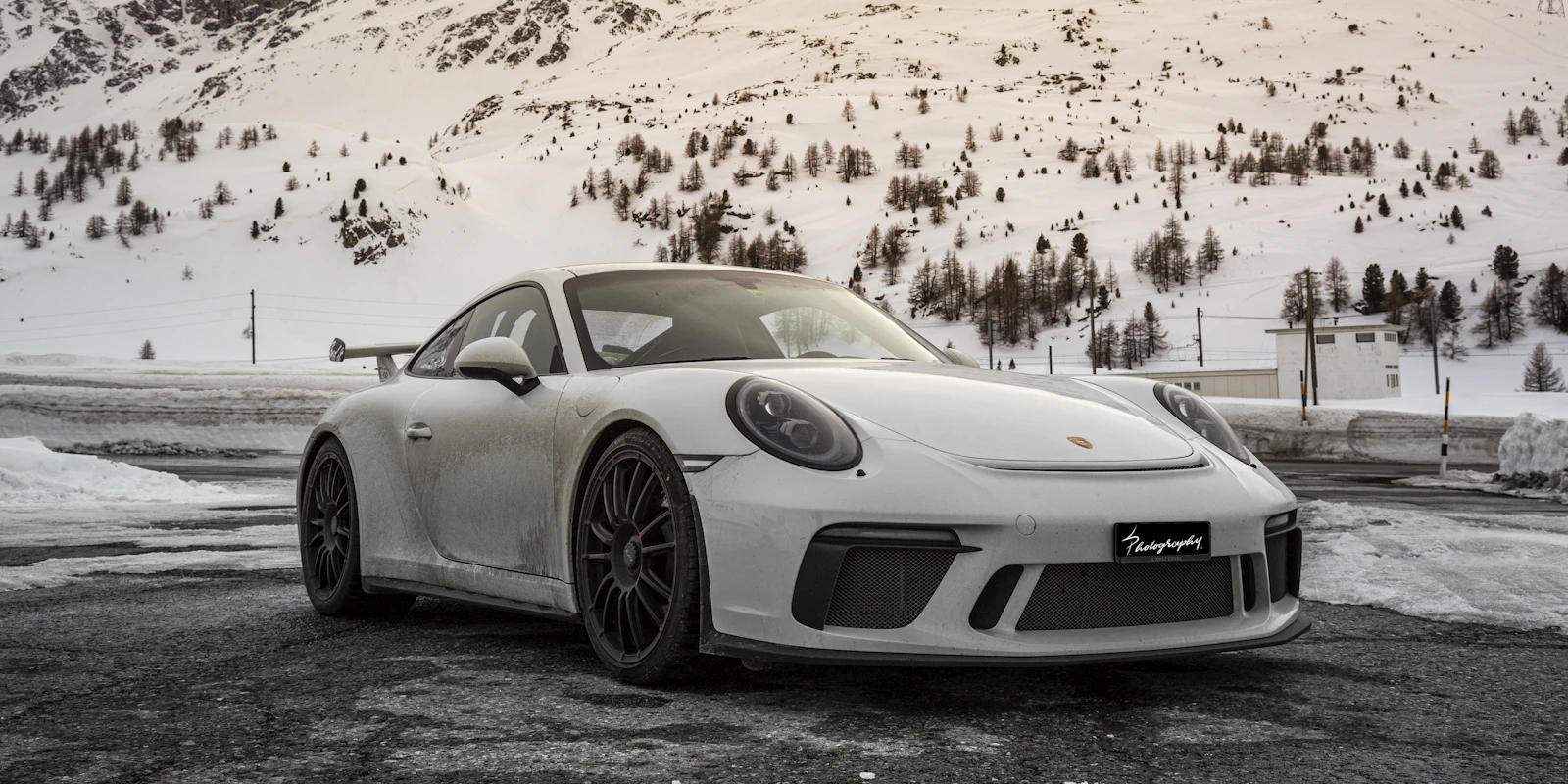
No car in this guide has a deeper used market than the 911. That means plenty of buyers, but it also means your car is compared with dozens of similar listings. Small differences in generation, transmission and options are what separate a strong offer from an average one.
This page is specific to the 911. For other Porsches, and for the full comparison of ways to sell, see the main Porsche guide.
At a glance
- Most valuable spec
- Manual gearbox, GTS and GT models, Paint to Sample colors, and the right options on the window sticker.
- Must-have document
- The DME over-rev report on manual and GT cars.
- Generation question
- IMS bearing and bore scoring on the 996 and 997.1. Neither applies to the 997.2 and later.
- Best route
- Specialist or auction for GT, manual and air-cooled cars. Dealer or specialist for everyday Carreras.
Which 911 do you have?
992
2019–presentThe current car. The 992.2 update arrived for 2025 with a hybrid GTS. Late cars are compared closely on options and remaining warranty. Manual Carrera Ts and GTSs, plus the S/T, Dakar and Sport Classic, carry premiums.
991
2012–2019The 991.1 (2012–2016) kept naturally aspirated engines in the Carrera. The 991.2 (2017–2019) moved the Carreras to turbocharged 3.0-liter engines. The GT3, GT3 RS, 911 R and 991.2 GT3 Touring are the collectible ones.
997
2005–2012The 997.1 (2005–2008) uses the M97 engine, so buyers ask about the IMS bearing and bore scoring. The 997.2 (2009–2012) switched to a direct-injection engine with no IMS bearing, one reason 997.2 cars, especially manuals, command more. Turbo, GT2 and GT3 models of this era, except the 997.2 Turbo, use the race-derived Mezger engine, which has neither problem.
996
1999–2005The first water-cooled 911 and the most affordable today. Most buyer questions are about the M96 engine. Receipts for an IMS bearing upgrade, or a recent borescope showing healthy cylinder walls, can make a big difference to the offer. The 996 Turbo and GT3 use the Mezger engine and sell on their own terms.
Air-cooled (993, 964 and earlier)
1965–1998Air-cooled 911s sell as collector cars. Originality, matching numbers, documented history and a Porsche Certificate of Authenticity matter more than mileage. These cars do best with specialist buyers, consignment or auction.
What 911 buyers check first
- TransmissionManual cars carry premiums in most generations, especially GTS, T and GT models. On a PDK car, buyers focus on options and condition instead.
- Factory optionsSport Chrono, front-axle lift, ceramic brakes (PCCB), rear-axle steering, sport exhaust, full bucket seats and Paint to Sample colors. A Porsche Certificate of Authenticity can confirm the factory specification from the VIN if the window sticker is lost.
- Engine evidenceThe DME over-rev report for manual and GT cars. IMS bearing and borescope paperwork for 996 and 997.1 cars.
- Body and drivetrainCoupe, Cabriolet and Targa sell to different buyers, and so do rear- and all-wheel-drive cars. Check that each offer compares your car with the same body and drivetrain.
- Mileage and useLow miles help. Disclosed track use on a GT car is normal. Undisclosed track use found at inspection costs far more than being upfront.
Where to sell a 911
GT cars, manuals and air-cooled 911s
Online enthusiast auctions and specialist buyers. These cars draw competitive bidding, and specialists price configuration properly. A strong listing needs the window sticker, the DME report and full records.
Late Carreras and Targas with warranty
A Porsche dealer, Porsche's own selling program, or a specialist buyer. Dealer and specialist offers are often close for these cars, so speed and convenience can decide it.
Older Carreras (996 and 997.1)
Specialist buyers and private sales. Engine documentation sets the price, so have it ready before you ask for offers.
Every route, compared side by side, is in the Porsche guide. Still paying off a loan or lease? See selling a Porsche with a loan or lease.
Documents that add value
- Window sticker, or a Porsche Certificate of Authenticity listing factory options
- DME over-rev report (manual and GT cars)
- IMS bearing upgrade receipt or a recent borescope report (996 and 997.1)
- Service records, including major services and any clutch replacement
- Both keys, books and the tire repair kit
- Original parts if the car has been modified
Common questions
Is a manual 911 worth more than a PDK?
Usually, yes. The gap is largest on GTS, T and GT models, where manual supply is limited. On some higher-volume Carreras the difference is smaller.
Which 911s have the IMS bearing problem?
The IMS bearing issue affects the M96 and M97 engines in 996 and 997.1 Carreras, roughly 1999 to 2008. The 997.2 and later Carreras use a different engine without an IMS bearing. Turbo, GT2 and GT3 models of that era use the Mezger engine, which also avoids it.
What is a Porsche Certificate of Authenticity?
A document from Porsche listing a car's factory specification, including original color and options, based on its VIN. It's useful when the original window sticker is lost.
Should I get an inspection before selling my 911?
For older or higher-value cars, it can help. A recent inspection with the DME report or borescope results answers a buyer's main questions upfront and makes offers firmer.